

Estheticians, Professional Skincare, Skincare
How To Explain Exfoliation To A First-Time Client

Aug
The first facial is a strange hour for a lot of people. They’ve filled out the intake form, changed behind a curtain, and now they’re lying under a sheet while someone they met ten minutes ago talks about enzymes. When you reach for the exfoliant and say “this might tingle,” you can feel some clients go stiff. Maybe a friend told them about a peel that left her red for a week, or a gritty scrub once stung and they never forgot it. What you say in the next half minute decides whether they relax into the service or spend the rest of it bracing.
Learning how to explain exfoliation to a first-time client is a small skill that pays off for years. A client who knew what to expect trusts you more, follows the home care plan, and rebooks without a second thought. A client who was surprised – by a sting, by pink cheeks at dinner, by a little flaking two days later – often decides professional care isn’t for her. She doesn’t need the chemistry. She needs plain answers to three questions: what you’re doing, what it’ll feel like, and what she’ll see in the mirror afterward.
What’s the simplest way to describe exfoliation?
Start with one sentence a client could repeat to a friend. We like something close to this: “Your skin is always making new cells and shedding old ones, and exfoliation helps the old ones let go a little sooner.” That’s accurate, and it doesn’t make her picture anything gross. If she wants more, there’s real science behind it. In a Shiseido study published in the Journal of the Society of Cosmetic Chemists, researchers measured how long the outer layer of skin took to renew on the forearm, and it averaged about 13 days in men in their twenties and about 15 days in men in their thirties and forties.
You can turn that into plain language without the numbers. “The top layer of your skin replaces itself every couple of weeks, and that slows down as we get older. When the old surface cells hang on, skin can look dull and feel rough, and products don’t sit as evenly.” An image helps some clients. Wiping the fog off a bathroom mirror works well, because the mirror was always there and you’re just clearing what’s sitting on top. Pick one comparison and stop. Three metaphors in a row sound like a sales pitch, and a nervous client stops listening after the first.
How do you explain the difference between a scrub, an enzyme and an acid?
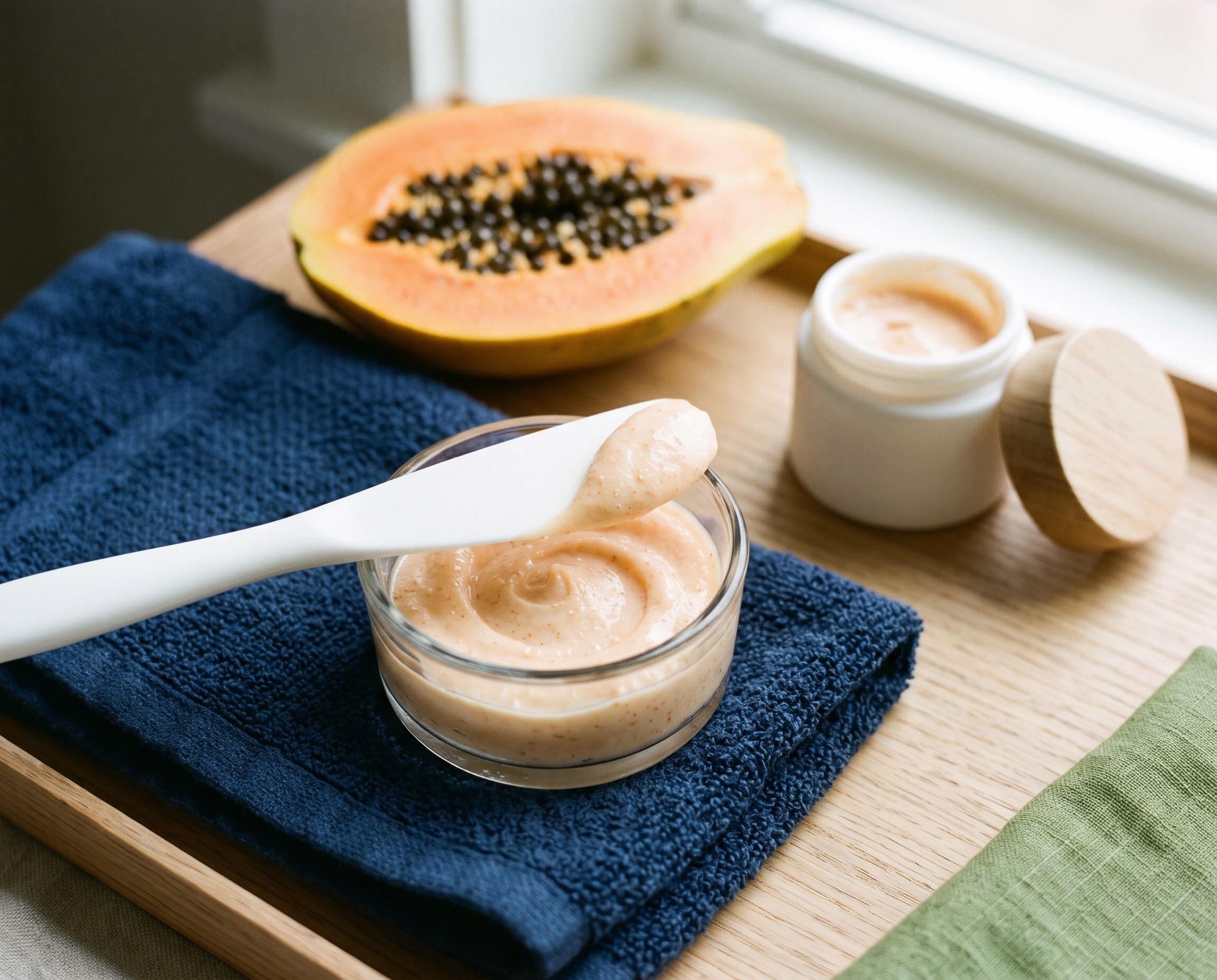
Most new clients picture a gritty scrub when they hear the word exfoliation, so start there. The American Academy of Dermatology sorts exfoliation into two groups, mechanical and chemical, and that split works fine for clients too. A scrub, a brush or a washcloth lifts the old cells by friction, and the client can feel it working. Enzymes and acids loosen the bonds that hold those cells on, so the work happens without rubbing. “A scrub is the physical way. An enzyme or a mild acid is the gentle, no-rubbing way.”
The word acid is where clients flinch. Don’t avoid it, because she’ll read it on a label later and wonder what you didn’t tell her. Explain it instead. “Lots of acids are mild. There’s acid in yogurt and in fruit, and the one I’m using is chosen and timed for your skin.” For enzymes, the fruit connection does the work for you, since many come from papaya, pineapple or pumpkin. For a first visit we’d often reach for an enzyme, and our Renewed Radiance Exfoliant uses enzymes to slough away dull surface cells and is mild enough for use two to three times a week, which makes it an easy introduction.
What will the client feel during exfoliation?
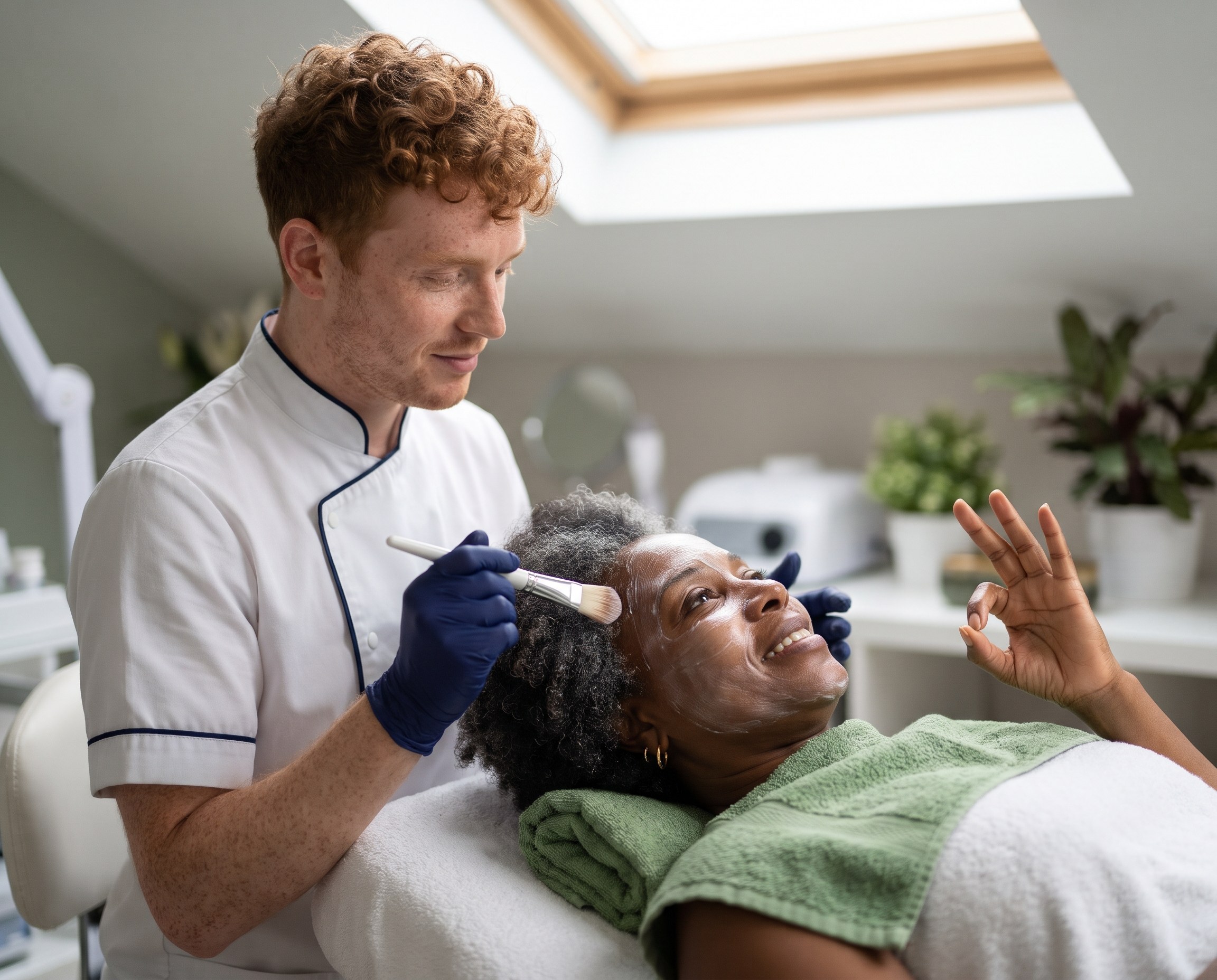
Give her real words for real sensations, before you apply anything. With an enzyme, most people feel very little – maybe light warmth, or a faint tingle around the nose and chin. With a mild acid, try “a tingle, a bit like the prickle of a mint on your tongue,” or “warmth, like stepping into the sun.” With a scrub, “you’ll feel the grains moving, and the pressure should be light. It shouldn’t scratch.” Clients handle almost any sensation better when they were told about it first. The same tingle that feels alarming as a surprise feels routine when it was predicted.
Then tell her where the line is, because this is the part most of us skip. Tingling and warmth that hold steady or fade are normal. Stinging that gets sharper, heat that keeps building, or itching that spreads means the product comes off. Say it plainly: “If anything feels sharp or hot, tell me and I’ll take it off right away. Nobody gets a prize for toughing it out.” A rating scale helps quiet clients who won’t speak up on their own. Ask her to call out a number from one to ten, and agree before you start that anything past a five means you remove it.
What should you say about how their skin will look right afterward?
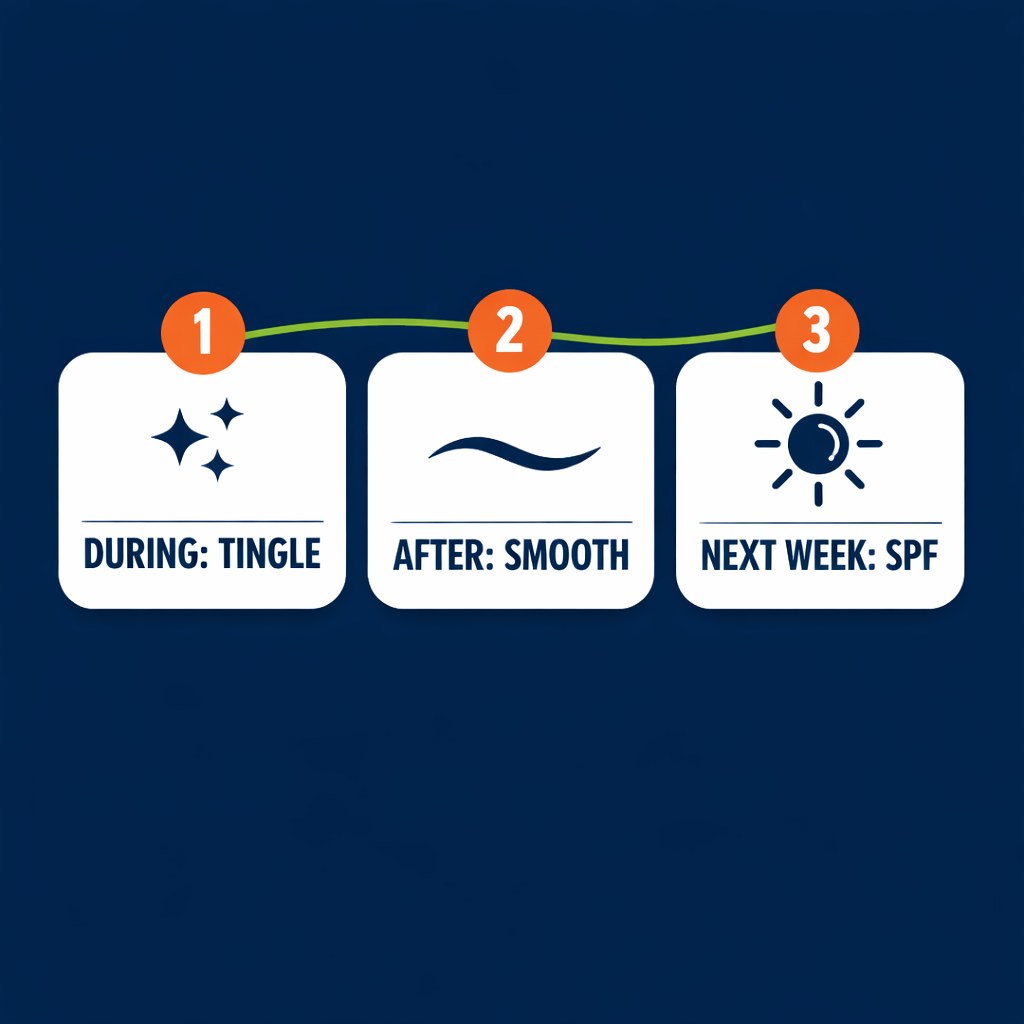
Set this expectation before she sees a mirror, not after. “You might look a little flushed, like after a brisk walk. For most people that settles within a few hours.” Then tell her what she’ll notice by touch, since that’s often the first thing clients comment on. Skin usually feels smoother and softer, and makeup tends to go on more evenly the next morning. Some clients also feel a little tight or dry. The AAD notes that exfoliating can be drying and recommends moisturizer right afterward, so finishing with a moisturizer gives you a natural place to say “this is why we always follow with hydration.”
Be careful about promising a glow. A gentle first service brings a modest change, and a client who was told she’d look radiant may feel let down by skin that’s simply smoother. “Smoother and a bit brighter” is honest, and she gets to discover anything beyond that on her own. That matters more for clients with deeper skin tones. The AAD warns that aggressive exfoliation can darken spots on darker skin, which is post-inflammatory hyperpigmentation (PIH, the dark marks irritation can leave behind). A slower, gentler start is the right call there, and you should say so out loud: “We’re starting gently on purpose, because your skin can hold on to marks if we push too hard.”
What will their skin look like over the next few days?

After a gentle enzyme, most clients won’t see much at all beyond a fresh, even look. After a mild acid, some will notice light flaking around the nose and mouth a day or two later. Tell her that ahead of time, and tell her what to do about it. “If you see a little flaking, that’s normal. Don’t pick at it or scrub it off – moisturize and let it go on its own.” Results also build over a series, because skin keeps renewing whether you’re there or not. A single session clears the surface, and regular visits keep it clear.
Sun protection is the part to say twice. The FDA has reported that after four weeks of using alpha hydroxy acids (AHAs, the family that includes glycolic and lactic acid), volunteers’ skin reddened from UV more easily, by 18 percent. Its labeling guidance advises sunscreen, protective clothing and limited sun while using AHA products and for a week afterward. In client language: “Your fresh skin is a little more sensitive to sun for about a week, so wear sunscreen every day, even when it’s cloudy.” Add the other short rules – no scrubs, retinol or at-home acids for a few days – and a clear one for problems. If she sees blistering, swelling, or burning that doesn’t fade, she calls the spa, and if it looks like more than simple irritation, you refer her to a physician.
Which words should you avoid with a first-time client?

Some words do more harm than the product ever could. “Peel” makes people picture sheets of skin coming off, even when you mean a mild acid. “Burn,” even in “it might burn a little,” plants the wrong sensation before you’ve started. “No pain, no gain” is worse, because it tells her to stay quiet when something hurts. “Dead skin” is accurate, but some clients find it unpleasant, and “old surface cells” says the same thing. Words like tingle, warmth, loosen and smooth describe what’s happening without dressing it up.
That doesn’t mean softening the truth. A client who’s told “you won’t feel a thing” and then feels a sting stops believing the rest of what you say. Plain and honest beats soothing and vague every time. It’s worth having the whole team agree on the same few phrases, so a client hears the same explanation from whoever is at the treatment bed or the front desk. Consistent language also makes training a new esthetician easier, since she learns what to say along with what to do.
How does a good explanation set up home care?
The first service is the best moment to talk about home exfoliation, because the client just felt it working. Start with pacing. The AAD’s rule of thumb is that the stronger the exfoliation, the less often it should be done, and over-exfoliating leaves skin red and irritated. Ask what she’s already using, too. The AAD points out that prescription retinoids, retinol and benzoyl peroxide can already make skin sensitive or peeling, so adding an exfoliant on top may make things worse. If she’s on a prescription acne or retinoid medication, she needs her physician’s okay before you plan anything stronger.
Once a client’s skin has handled a few in-room services, a daily-use AHA can carry the work home. Our 10% Glycolic Acid Emulsion is a glycolic acid cream made for gentle, daily exfoliation, and its directions tell clients to patch test first, note that it may sting, and say it’s not for sensitive skin. That makes it a product to recommend after you know how a client’s skin behaves, not on her first visit. Explain it the same way you explained the service: what it does, what she’ll feel, and what to do if it’s too much. A client who hears the same calm, plain explanation at home and in the room tends to stick with the plan.
FAQs
Should I skip exfoliation on a client’s first facial?
Not usually. A gentle enzyme is a good way to introduce exfoliation, and most first-time clients tolerate it well. Skip it if the skin is sunburned, broken or visibly irritated, which the AAD lists as times not to exfoliate. Hold off too if she’s using prescription retinoids or acne medication until her physician has weighed in.
What should I do if a client says it burns?
Take the product off right away with cool water, then follow with something calming and a moisturizer. Note what you used, how long it was on, and what she felt in her chart. Thank her for speaking up, because that’s the behavior you want. Next visit, start with a milder product or a shorter contact time.
How do I explain why one session isn’t enough?
Tell her the skin keeps renewing every couple of weeks, so the surface you cleared today will build up again. Regular visits keep pace with that cycle, and home care fills the gaps between them. Most clients accept this easily once they hear it’s simply how skin works.
Is it normal for a client to break out after exfoliation?
A few small blemishes can show up as congestion comes to the surface, and that usually settles quickly. Widespread breakouts, painful bumps or a rash aren’t normal and mean you should reassess the products. If it looks like acne that needs medical care, refer her to a dermatologist.
The words you choose in the first two minutes of a service shape how a client feels about everything that follows. Clients don’t need the biology. They need to know what you’re doing, what it’ll feel like, what’s normal and what isn’t, and what their skin will do over the next week. Give them that in plain, honest language, and a nervous first-timer becomes a client who knows what to expect and comes back for it. If you’d like to bring our exfoliants into your treatment room, you can open a professional account with us.
References
- American Academy of Dermatology – How to Safely Exfoliate at Home
- U.S. Food and Drug Administration – Alpha Hydroxy Acids
- U.S. Food and Drug Administration – Labeling for Cosmetics Containing Alpha Hydroxy Acids
- Journal of the Society of Cosmetic Chemists – Measurement of Turnover Time of Stratum Corneum Using Dansyl Chloride Fluorescence
Related Posts
 How Do You Get the Most Out of a Sheet Mask in a Facial
 HydraFacials – The Treatment That Gives Without Taking Away
 Why Bother with Professional Facials? The Benefits of Regular Treatments
 Unlocking the Secrets to Celebrity Perfect Skin
 The Benefits of Using Collagen Sheet Masks
 The Benefits of Essential Fatty Acids (EFAs) for Your Skin
 The Rise of Fast Facials: A Comprehensive Guide to Achieving Healthy Skin in a Time-Sensitive World
 How Do Oxygen Facials Benefit Your Skin?
 Will a facial improve my complexion?
 How Should Estheticians Adjust Facials for Winter Versus Summer
 What Are the Main Brightening Ingredients and How Do They Differ
 DIY vs. Professional Skincare What’s Best for Your Skin
