

Estheticians, Professional Skincare, Skincare
What Are the Main Brightening Ingredients and How Do They Differ
Sep
Every esthetician knows the client who points at one spot. It sits on her cheekbone or just above her lip, and she’s already tried three serums she found online without seeing much change. She wants to know what works, and she’d like you to pick for her. That question deserves a better answer than “try vitamin C.” The main brightening ingredients work at different points along the path that puts pigment in the skin, and once you know where each one acts, choosing and combining them gets a lot simpler.
This piece compares the three brightening ingredients you’ll see most often on back bars and retail shelves – vitamin C, kojic acid and niacinamide. We’ll look at what each one does, where each tends to fall short, and how to pair them in the treatment room and at home without irritating the skin you’re trying to even out. None of them work fast, and none of them work without sunscreen. But used with a plan, they give clients a realistic path toward a more even-looking tone. They also give you a good reason to see that client every four weeks instead of once a season.
How does pigment end up on the surface of the skin?
It helps to picture the process as a short assembly line. Melanocytes in the basal layer make melanin inside small packets called melanosomes, and the enzyme tyrosinase drives the main early steps of that chemistry. The finished melanosomes are then handed off to the surrounding keratinocytes, the cells that make up most of the epidermis, which carry the pigment up toward the surface as they mature. UV light, visible light, heat and inflammation all speed the line up. Brightening ingredients slow it down at one point or another. Some interfere with tyrosinase, some quench the oxidative stress that switches production on, and some block the handoff from melanocyte to keratinocyte. That’s why the three ingredients in this article behave so differently, and why they tend to work better together than alone.
What does vitamin C do for brightening?
Vitamin C is an antioxidant first. L-ascorbic acid, its pure form, neutralizes free radicals generated by UV exposure, and it interacts with the copper at tyrosinase’s active site, which reduces how much pigment gets made. So it works early in the line and also helps with the stress that starts it. It’s one of the better-studied ingredients for the look of photoaged skin as well, which makes it an easy morning recommendation for clients worried about dullness and fine lines along with their spots. The catch is chemistry. L-ascorbic acid is unstable in water, oxidizes when it meets air, light and heat, and carries a charge that keeps it from moving easily through the stratum corneum.
Formulators handle that in two ways. A review in The Journal of Clinical and Aesthetic Dermatology notes that bringing L-ascorbic acid to a pH below 3.5 improves both its stability and its penetration, which is why many pure vitamin C serums tingle and don’t suit every client. The other route is derivatives such as sodium ascorbyl phosphate and aminopropyl ascorbyl phosphate, which are more stable and usually gentler, though the skin has to convert them before they do their work. Our High Potency Vitamin C Serum combines ascorbic acid with sodium ascorbyl phosphate and aminopropyl ascorbyl phosphate in one concentrate, so it doesn’t rely on a single form. Whatever product you use, teach clients to watch for a serum that has turned dark orange or brown, since that’s a sign the vitamin C has oxidized. Keep it capped, cool and away from the bathroom window.
How is kojic acid different?

Kojic acid is made by several fungi, including the Aspergillus molds used in koji to ferment sake and soy sauce. It binds the copper that tyrosinase needs to function, which makes it a slow-binding tyrosinase inhibitor and puts it right at the first step of melanin production. Cosmetic makers in Japan have used it since 1988, and dermatology reviews have long ranked it among the more effective over-the-counter brighteners. It’s more focused than vitamin C. It doesn’t bring much antioxidant support, but it’s a direct way to slow pigment where it starts.
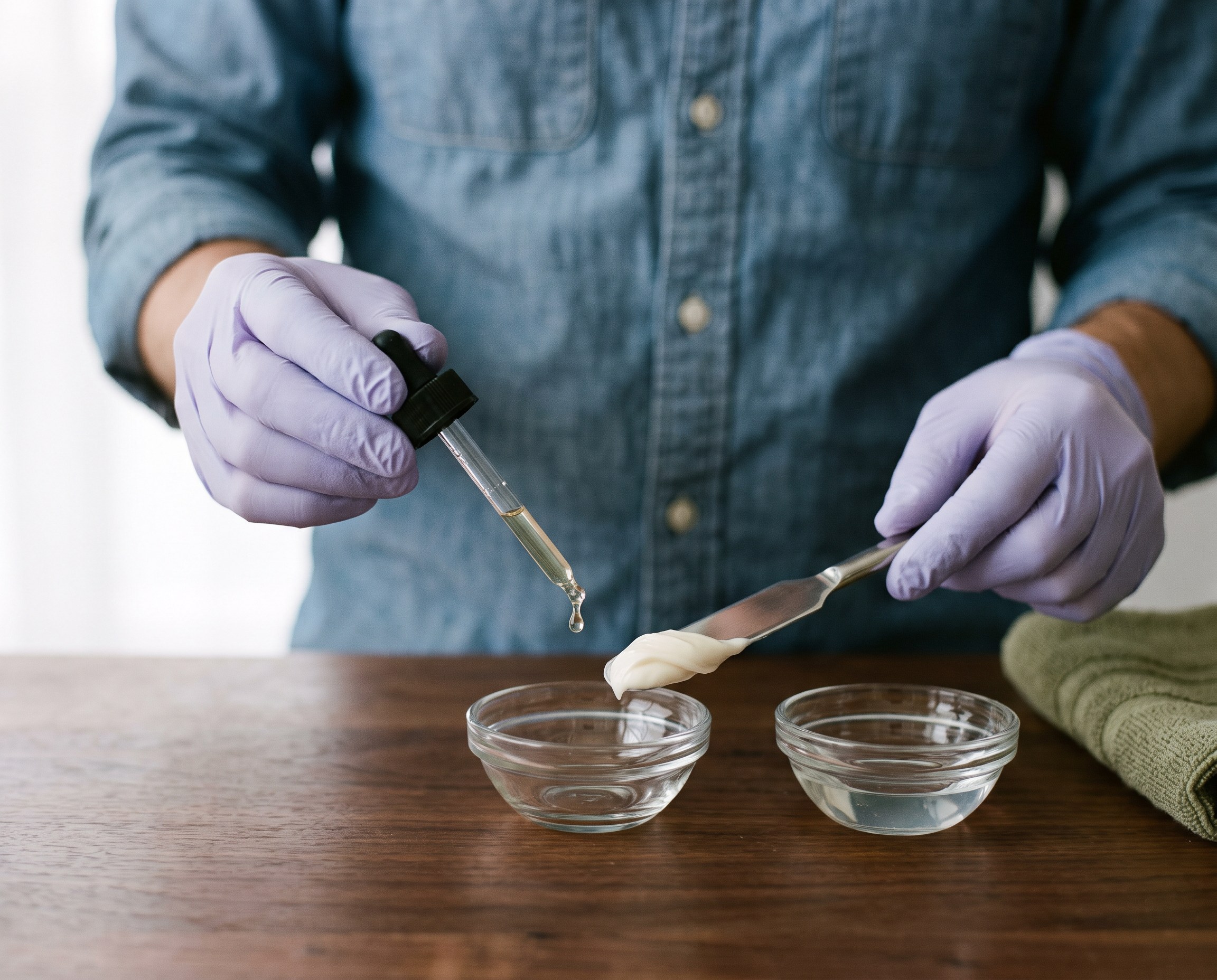
Its weakness is tolerance. Kojic acid has a reputation as a sensitizer, and reports of facial contact dermatitis at 2.5 percent pushed most formulas down to around 1 percent, though some sensitivity shows up even there. That makes patch testing a must for new clients, especially anyone with a history of reactive skin. Kojic acid also discolors in light and air, which is why you’ll often find it in a cream or oil base, or as kojic dipalmitate, a more stable ester. Our Kojic Acid Cream uses a natural oil base to help the kojic acid absorb, and it’s designed to help reduce the appearance of dark spots and discoloration. We’d have a client use it a few nights a week at first, then build to nightly once you know her skin tolerates it.
Where does niacinamide fit in?
Niacinamide, a form of vitamin B3, works at a different point entirely. In the study that put it on the map, published in the British Journal of Dermatology in 2002, niacinamide had no effect on tyrosinase activity or on melanin production in cultured melanocytes. Instead, it reduced the transfer of melanosomes from melanocytes to keratinocytes. In the same paper, 18 women with facial hyperpigmentation used a 5 percent niacinamide moisturizer on one side of the face and a plain moisturizer on the other, and the niacinamide side showed less visible hyperpigmentation after four weeks. Pigment is still being made, but less of it reaches the cells that carry it to the surface.
That mechanism has two practical consequences. First, niacinamide pairs naturally with anything that works on tyrosinase, because the two aren’t competing for the same job. Second, its effect is reversible. A 2005 study in Experimental Dermatology found that melanosome transfer recovered once niacinamide was removed, which matches what many estheticians see when a client stops her serum and her tone drifts back. Niacinamide is also well tolerated and supports the barrier, which makes it the friendliest of the three for sensitive and reactive skin. It’s the one we’d start with for a client who can’t handle acids or a low-pH vitamin C, and it’s the one most worth keeping as maintenance after the spots have faded.
Can you use vitamin C and niacinamide together?

Yes, and the old warning against it doesn’t hold up. The concern came from older chemistry showing that niacinamide and ascorbic acid can form nicotinic acid, which causes flushing, but those experiments combined pure forms of both ingredients at high temperatures. At room temperature, and at the concentrations used in skincare, that reaction isn’t a practical problem. There’s still a sensible formulation point underneath the myth. Niacinamide is most stable near a neutral pH, while pure L-ascorbic acid needs a low one, so a very acidic vitamin C serum and a niacinamide serum may each perform best on their own. If a client feels a flush or a tingle when she layers them, have her use the vitamin C in the morning and the niacinamide at night, or wait a few minutes between steps.
How should you combine all three in a protocol?
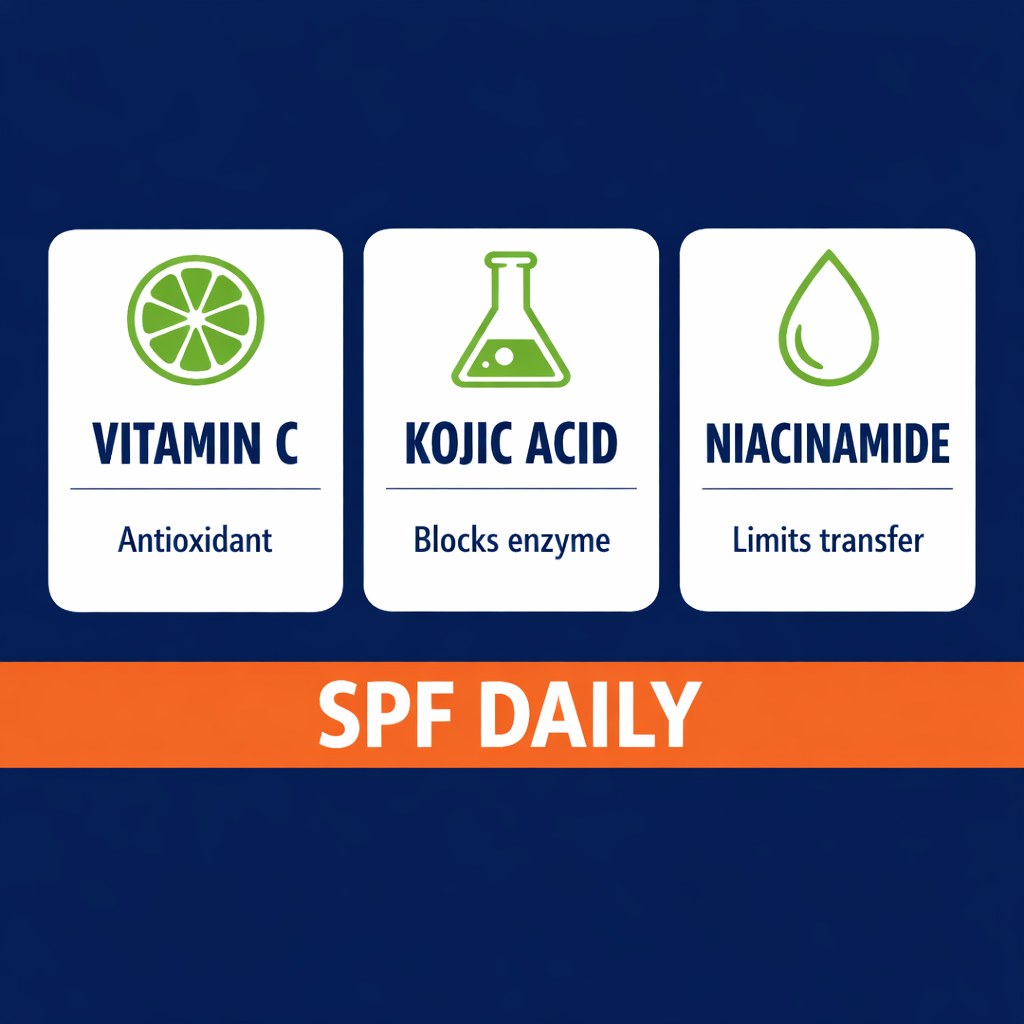
Think in terms of mechanism, not ingredient count. Vitamin C slows production and handles oxidative stress, kojic acid slows production at the enzyme, and niacinamide limits how much pigment reaches the surface. A simple home plan puts vitamin C in the morning under sunscreen, where its antioxidant role does the most good, and kojic acid at night, when light can’t degrade it and any sensitivity has time to settle. Niacinamide can go morning, night or both, because it’s gentle and layers easily. Add one product at a time, about two weeks apart, so you can tell which one caused a reaction if it happens. For clients who’d rather keep things simple, one multi-ingredient formula can cover more than one step. Our Lighten and Brighten Serum combines eight brightening ingredients, including vitamin C, kojic acid, niacinamide and glycolic acid, and because it contains glycolic acid, clients need to protect their skin from the sun while they use it.
The same logic applies in the treatment room. Gentle exfoliation, such as an enzyme or a light acid, clears the surface buildup that holds pigment and helps home products reach where they need to go. Follow it with a vitamin C or niacinamide step and sunscreen before the client leaves, rather than piling every active into one service. Be careful with stronger peels on deeper Fitzpatrick types (the scale that sorts skin by how it responds to sun), since irritation is the fastest way to create post-inflammatory hyperpigmentation (PIH, the dark marks left behind after inflammation), which is exactly what you’re trying to fade. A brightening series works best as a steady build over several months, with homework between visits. Set that expectation at the first consultation so the client doesn’t give up at week three.
What should you tell clients about sunscreen and timelines?

Tell them brightening ingredients can’t outrun the sun. The American Academy of Dermatology recommends a broad-spectrum, water-resistant sunscreen with SPF 30 or higher for anyone trying to fade dark spots, and suggests a tinted sunscreen with iron oxide to block visible light, which also drives pigment, particularly in deeper skin tones. Without daily protection, a client can use a very good serum and still watch new spots form beside the fading ones. Be honest about pace, too. The AAD notes that a spot a few shades darker than a person’s natural skin color usually takes six to twelve months to fade once its cause has stopped. That’s a long time to stay motivated, which is where your follow-up visits and progress photos earn their keep.
Know when to step back as well. Melasma, sudden new patches, spots that change shape or color, and pigment that shows up alongside other symptoms all belong with a dermatologist. An esthetician can support those clients with gentle care and good home habits once a physician has made a diagnosis, but brightening products aren’t a substitute for one. If you aren’t sure, refer. Clients tend to trust you more for it, not less.
FAQs
Which brightening ingredient is gentlest for sensitive skin?
Niacinamide, in most cases. It doesn’t depend on a low pH, and it doesn’t carry kojic acid’s reputation for sensitization. Start there and add vitamin C or kojic acid once you know the skin tolerates actives. Patch test anything new regardless.
How long before clients see results?
Most clients notice a brighter overall look within a few weeks, but individual spots take longer, often several months. Daily sunscreen makes the biggest difference to how fast that happens. Take photos under the same light at each visit so progress is easy to see.
Can kojic acid be used with retinol or glycolic acid?
It can, and kojic acid has been studied alongside glycolic acid in brightening formulas. The risk is irritation from stacking actives, so introduce one at a time and alternate nights if the skin turns pink or tight. Irritation can leave dark marks of its own.
Do brightening products get rid of dark spots for good?
No. They help reduce the appearance of spots, and niacinamide’s effect fades once a client stops using it. New spots keep forming with sun exposure, so most clients need a maintenance routine and daily sunscreen to hold on to their results.
Vitamin C, kojic acid and niacinamide aren’t interchangeable, and that’s the most useful thing about them. Each one works on a different stage of pigment production, so a plan that uses two or three of them, with sunscreen and patience, will usually do more than a stronger version of any single ingredient. Choose the starting point based on the client’s tolerance, build slowly, and keep the conversation going between visits. If you’d like to bring these into your treatment room, you can open a professional account with us.
References
- British Journal of Dermatology – The Effect of Niacinamide on Reducing Cutaneous Pigmentation and Suppression of Melanosome Transfer
- Experimental Dermatology – Effective Inhibition of Melanosome Transfer by Lectins and Niacinamide Is Reversible
- The Journal of Clinical and Aesthetic Dermatology – Topical Vitamin C and the Skin
- Journal of Cosmetic Dermatology – A Review of Topical Vitamin C Derivatives and Their Efficacy
- Journal of Pharmacy and Pharmacology – Kojic Acid Is a Slow-Binding Inhibitor of Tyrosinase
- Dermatology News – Kojic Acid
- Biomedicine and Pharmacotherapy – Kojic Acid Applications in Cosmetic and Pharmaceutical Preparations
- UL Prospector – Benefits of Niacinamide
- American Academy of Dermatology – How to Fade Dark Spots in Darker Skin Tones
Related Posts
 DIY vs. Professional Skincare What’s Best for Your Skin
 Why Visiting an Aesthetician to ‘Diagnose’ Skin Issues is Better Than Searching for Answers on Google or social media
 Authentic Spa Upsells Without Pressure
 Snail Mucin: The Secret Ingredient Your Treatment Room Might Be Missing
 From High-Tech Facials to Holistic Healing: Inside the Latest U.S. Day Spa Trends
 How Do You Get the Most Out of a Sheet Mask in a Facial
 How Should Estheticians Adjust Facials for Winter Versus Summer
 Why Spa Owners Are Tired of Juggling Systems – and How You Can Stop the Chaos
 Post Inflammatory Erythema What It Is What Triggers It and How to Treat It
 HydraFacials – The Treatment That Gives Without Taking Away
 Why Bother with Professional Facials? The Benefits of Regular Treatments
 Empowering Healing: The Role of Salons and Spas in Oncological Skincare
