

Estheticians, Professional Skincare, Salon Biz, Skincare
How Should Estheticians Adjust Facials for Winter Versus Summer

Oct
The first cold week of the year always shows up on your treatment bed before it shows up on the forecast. A client who was oily and congested in August lies down in November with tight cheeks, a little flaking around the nose, and a sting when the toner goes on. She hasn’t changed her routine, so she’s confused and maybe a bit worried that something’s wrong. Nothing’s wrong. Her skin is doing what skin does when the air dries out and the heat comes on, and the facial you gave her in July isn’t the facial she needs now.
Knowing how to adjust facials for winter versus summer is one of the simplest ways to show clients you’re paying attention to their skin rather than running the same service on repeat. The changes aren’t dramatic. They come down to three things: what’s happening in the skin, which textures you reach for, and how hard you exfoliate. Get those right and the service feels made for the client that week. Get them wrong and you’ll spend January calming down irritation you caused, or August fighting congestion you could have cleared.
What changes in the skin between winter and summer?
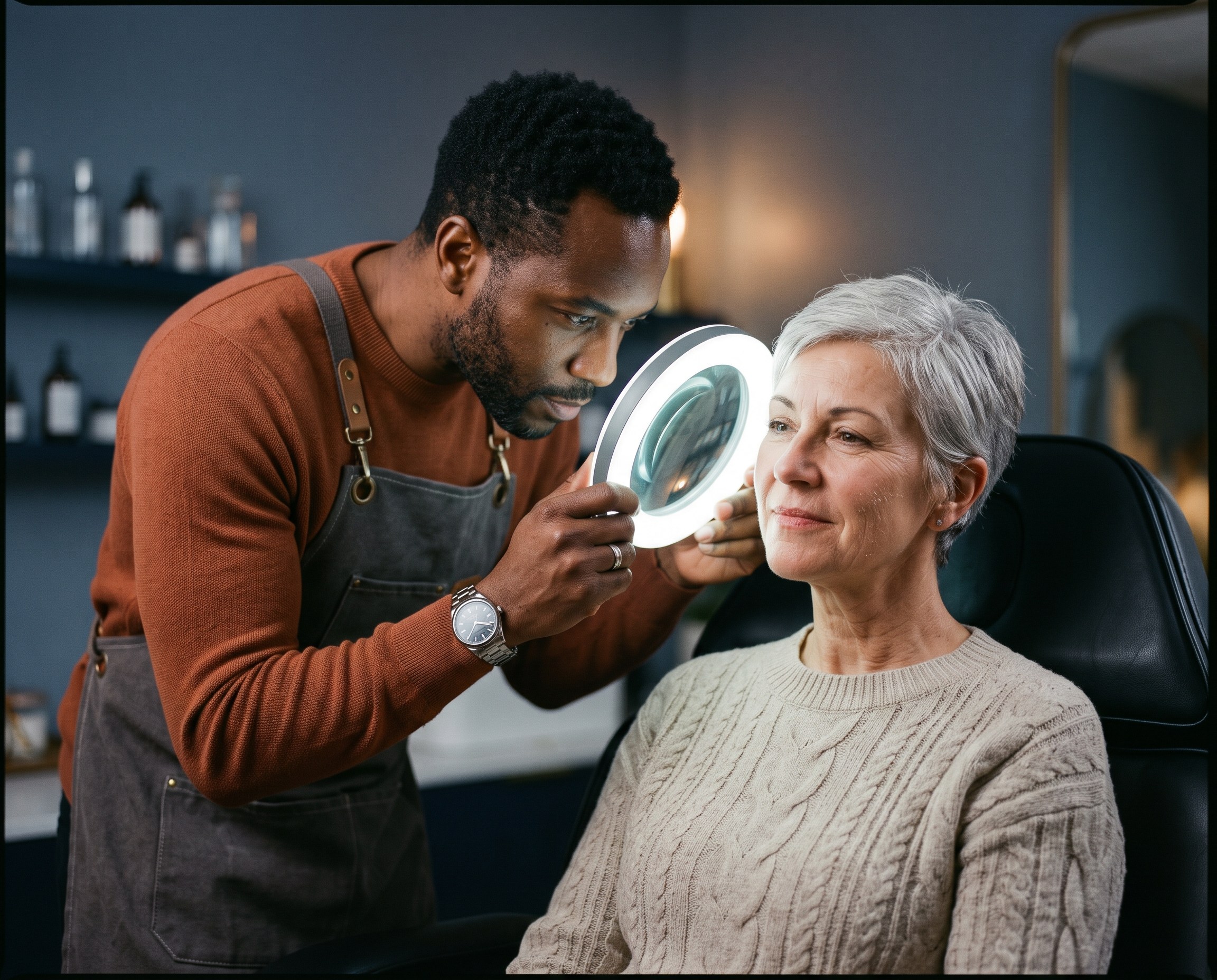
The research here is consistent enough to plan around. A 2016 study in the Journal of Cosmetic Science followed 25 women from one winter to the next summer and found lower transepidermal water loss (TEWL, the water that evaporates out through the skin) and higher hydration in summer. The same study measured more ceramides and cholesterol in the stratum corneum in summer. Those are the lipids that hold the barrier together, so winter skin is working with less mortar between the bricks. A large study of about 500 women across five Asian cities found the same direction on the face, with drier surfaces and higher TEWL in winter. Researchers have also noted that the face tends to swing more than the body does, which is why clients notice it on their cheeks first.
Oil follows the thermometer too. A year-long study that measured sebum at five points on the face found summer was the highest-output season, with the forehead, nose and chin producing more than the cheeks. A study of Korean men found more sebum and more visible pores in summer, a higher skin surface pH in winter, and a significant jump in stinging sensitivity during the winter months. Put those together and you get a useful rule of thumb. Summer skin tends to be oilier, more congested and better hydrated, while winter skin is drier, more alkaline on the surface and quicker to react. The skin type on a client’s intake form is a baseline, not a fixed label, and it’s worth checking again at every seasonal visit.
How should your winter facial feel different?
In winter we’d shift the whole service toward comfort and barrier support. Start with a cleansing milk or cream cleanser instead of a foaming gel, and keep the water lukewarm, because hot towels and hot water strip the lipids the client is already short on. The American Academy of Dermatology points out that humidity drops both outdoors and inside heated homes, so the skin on your bed has likely spent weeks in dry air. Steam is still useful, but shorten it and keep the steamer farther back, especially on clients with visible redness. Extractions take more care too, since flaky, fragile skin marks more easily. If a client shows signs that look like eczema or a rosacea flare, that’s a referral to a dermatologist, not something to work around with a different mask.
Texture choices carry most of the winter adjustment. Richer creams, balms and oil-containing masks suit dry, tight skin better than the gels and clay masks you reach for in August. Layering helps here, since a hydrating serum under a cream adds water and then slows its escape. For massage, a little more slip and a slower pace go a long way on skin that’s already irritated by wind and indoor heat. For home care, a cream with fatty acids is a sensible night step, and our Calming Rejuvenation Crème is rich in essential fatty acids, including multiple omegas, which makes it a good fit for that dry, tight skin. Lips and the skin around the nostrils usually need extra attention too, and they’re easy to forget at the end of a service.
How hard should you exfoliate in winter?
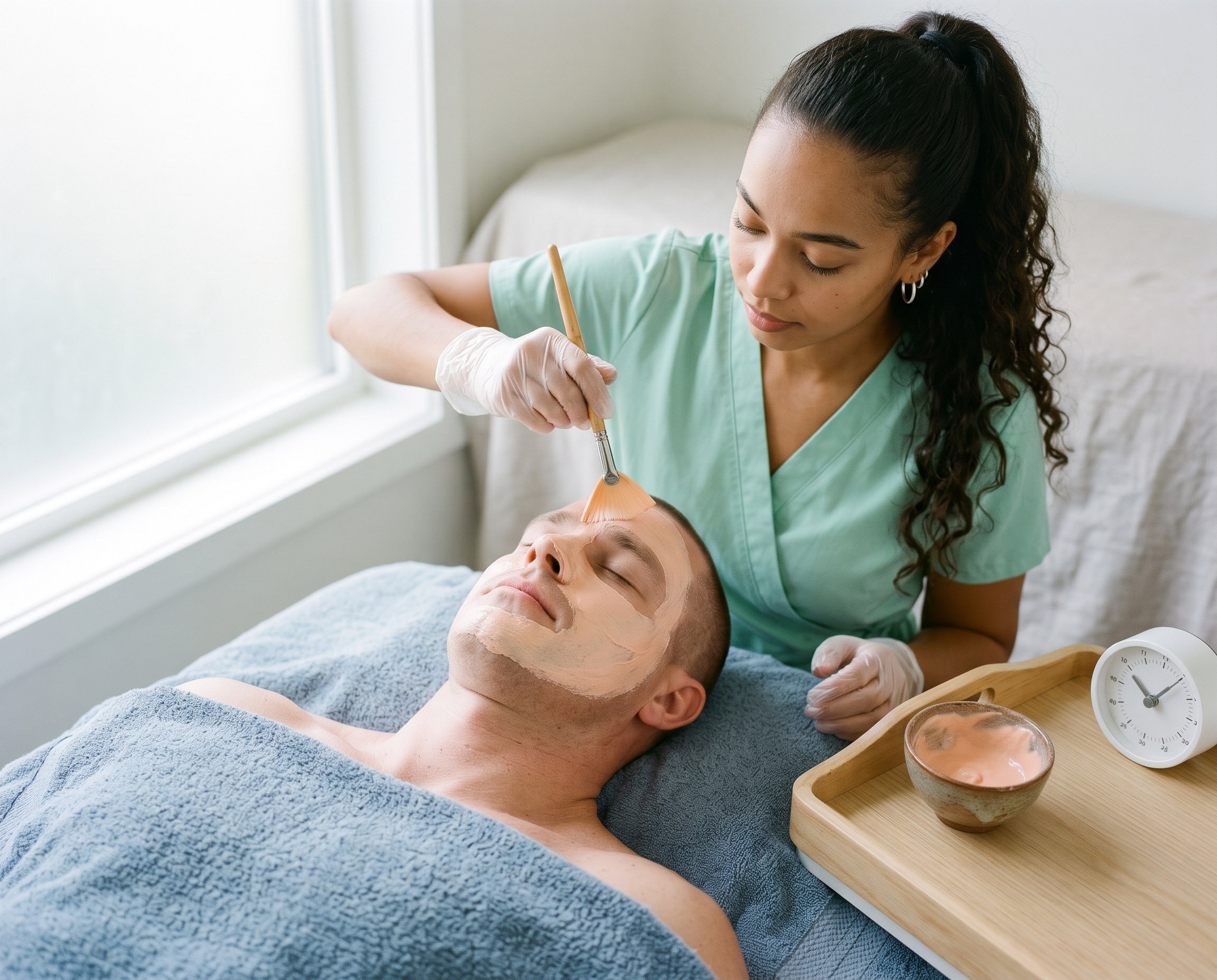
Less than you think, and more carefully than you’d like. Winter skin often looks dull and flaky, and the natural instinct is to buff it off with a stronger peel or more passes. But that flaking usually comes from a stressed barrier, and aggressive exfoliation strips lipids that are already low. We’d lower acid strength, shorten contact time, and favor gentle enzymes or a single mild acid pass over layering several actives. A soft enzyme option like our Fruit Enzyme Mask, which offers gentle exfoliation while it draws out impurities, fits this kind of light-touch winter service. Watch the client’s reaction during application, and don’t push through a sting just because the protocol says ten minutes.
There’s a case for deeper work in winter, and it’s fair to make it. Many practitioners prefer the colder months for stronger resurfacing because clients spend less time in the sun afterward. That logic holds only if the client’s barrier can take it and she’s committed to home care. Ask about windburn, recent ski trips and retinoid use before you plan a series. The Skin Cancer Foundation notes that snow and ice can reflect up to 80 percent of UV rays, so a client heading to the mountains after a peel isn’t low-risk at all. Build the series slowly, assess between sessions, and stop when the skin tells you to.
What changes in a summer facial?
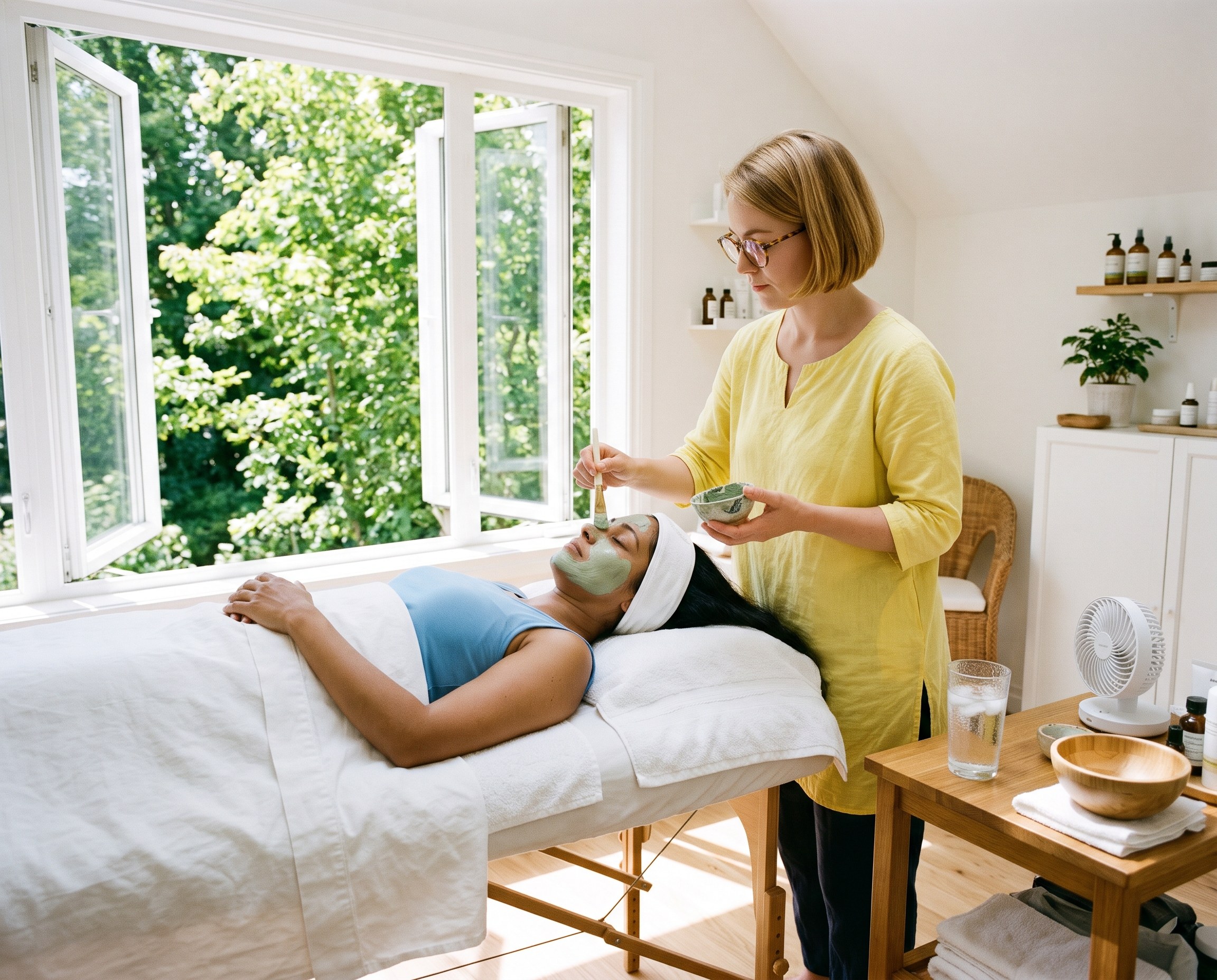
Summer flips most of the winter priorities. Skin carries more oil, more congestion and more sweat, and clients often come in feeling heavy and shiny instead of tight. Gel cleansers, clay masks and lighter massage mediums make more sense now, and you can give extractions more time on the T-zone, where sebum runs highest. Cooling steps feel good and help the client leave without a flushed face in the heat. Keep the closing products light, since a water-based serum and a thin moisturizer under sunscreen usually beat a rich cream. Hydration still matters, though, and skin that’s been in air conditioning all day can be oily and dehydrated at the same time.
For summer home care, lightweight hyaluronic textures are the easy recommendation. Our Hydration Plus Night Gel is a clear gel with hyaluronic acid, so it adds moisture without the weight oily clients complain about in July. Pair it with a real sunscreen conversation at checkout rather than a quick reminder at the door. Clients who skip daytime protection undo a lot of what you did on the bed. And a client who swears her skin is too oily for moisturizer usually needs a lighter one, not none at all. Summer is a good time to fix that habit, while she can see the shine for herself.
How hard should you exfoliate in summer?

Summer skin can usually handle more surface exfoliation, but sun exposure sets the ceiling. The FDA’s review of alpha hydroxy acids found that after four weeks of AHA use, volunteers’ sensitivity to UV-induced reddening rose by 18 percent. Its labeling guidance advises sun protection while using AHA products and for a week afterward. That doesn’t take glycolic off the menu in July. It means you match the strength to the client’s real sun habits. A client who works indoors and wears sunscreen daily can keep a regular light peel schedule, while a client who spends weekends on a boat should get enzymes, a gentle scrub or a lower-strength acid, plus a firm conversation about protection.
Ask about vacations before you book anything strong. A peel the week before a beach trip is a common way to end up with irritation and pigment problems, especially on deeper Fitzpatrick types (the scale that sorts skin by how it responds to sun), where post-inflammatory hyperpigmentation (PIH, the dark marks left after irritation) is a real risk. Space stronger treatments away from travel, and keep the client’s at-home acids and retinol in step with what you’re doing in the room. If a client arrives sunburned, skip exfoliation entirely and give her a calming, hydrating service instead. That kind of judgment call is what clients remember.
How do you handle the shoulder seasons?

Spring and fall are where most adjustments go wrong, because the weather changes faster than routines do. In fall, ease clients off the lighter summer products a few weeks before the heat comes on, and start trimming exfoliation as soon as you see tightness. In spring, reverse it. Lighten textures gradually and bring back stronger exfoliation only after the winter dryness has cleared. A short seasonal re-consultation at the start of a service gives you a reason to update home care and gives the client a reason to rebook. It also catches the client who’s still using her heavy winter cream in May and wondering why she’s breaking out, so note the changes on her chart and pick up there next visit.
FAQs
Should I change a client’s facial every season, or only when her skin changes?
Change it when her skin changes, and expect that to happen around the seasons. Recheck at each visit rather than switching protocols on a calendar date. Climate matters too, since a client in a humid coastal town and one in a dry mountain city won’t shift the same way. Let what you see on the bed drive the adjustment.
Is it safe to do chemical peels in winter?
Often, yes, and many estheticians prefer winter because sun exposure is lower. The barrier still needs to be in good shape, and sun protection still applies, especially around snow. Start conservative and build from there.
Can oily-skinned clients skip moisturizer in summer?
Most shouldn’t. A light gel or lotion keeps hydration up without adding shine, and skipping it can leave skin dehydrated and reactive. The answer is a lighter texture, not no texture.
When should I refer a client to a dermatologist instead of adjusting the facial?
Refer when you see signs of a medical condition, such as persistent redness that suggests rosacea, cracked or weeping patches that look like eczema, or a lesion that’s changed. Those are outside an esthetician’s scope, and the client is better served by a diagnosis. You can keep supporting her comfort with gentle services once a physician has weighed in.
Seasonal facials don’t need a new menu. They need you to look at the skin in front of you, ask a few extra questions, and adjust texture and exfoliation to match. Winter rewards a lighter hand and richer products. Summer gives you room to clear congestion and exfoliate more, as long as the client’s sun exposure is under control. Clients notice when a service fits the way their skin feels that week, and that’s what keeps them booking through every season. If you’d like to bring these products into your treatment room, you can open a professional account with us.
References
- Journal of Cosmetic Science – Effects of Season on Stratum Corneum Barrier Function
- Skin Research and Technology – Regional and Seasonal Variations in Facial Sebum Secretions
- International Journal of Cosmetic Science – Seasonal Variation of Skin Parameters in Korean Males
- Skin Research and Technology – Seasonal Effects on Facial Skin of Asian Women
- American Academy of Dermatology – Cold Weather and Your Skin
- U.S. Food and Drug Administration – Alpha Hydroxy Acids
- U.S. Food and Drug Administration – Labeling for Cosmetics Containing Alpha Hydroxy Acids
- The Skin Cancer Foundation – Winter Sun Protection for Winter Sports
Related Posts
 How Do You Get the Most Out of a Sheet Mask in a Facial
 Why Bother with Professional Facials? The Benefits of Regular Treatments
 The Esthetician’s Perspective on Hydration: More Than Just a Moisturizer
 What Are the Main Brightening Ingredients and How Do They Differ
 DIY vs. Professional Skincare What’s Best for Your Skin
 Why Spa Owners Are Tired of Juggling Systems – and How You Can Stop the Chaos
 Post Inflammatory Erythema What It Is What Triggers It and How to Treat It
 HydraFacials – The Treatment That Gives Without Taking Away
 Snail Mucin: The Secret Ingredient Your Treatment Room Might Be Missing
 Empowering Healing: The Role of Salons and Spas in Oncological Skincare
 The Essential Skin Care Routine: What You Really Need for Healthy Skin
 Why Visiting an Aesthetician to ‘Diagnose’ Skin Issues is Better Than Searching for Answers on Google or social media
